ExperimentViking runestones
Coming soon
Raise a Stone
Can small fine-tuned AI models read Viking runestones better than frontier AI?
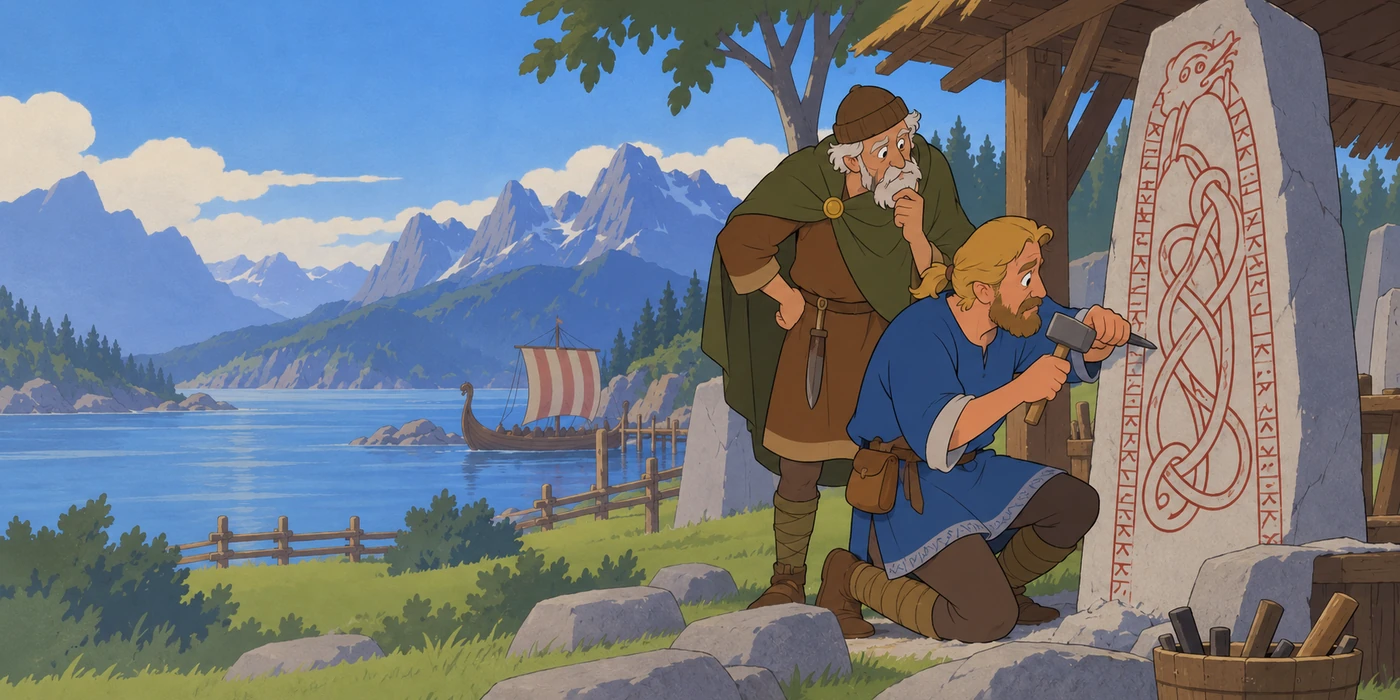
Viking carvers wrote with just sixteen runes and no spelling rules. One rune could stand for several sounds, and the same word could be carved many different ways. This experiment asks whether small open models, trained on a home graphics card, can learn to read runes the way scholars do, and how close they come to the largest commercial AIs.
The write-up is getting its finishing touches. When it opens, you will be able to follow every step and read the stones alongside the models.
The alphabet
Sixteen runes for many sounds
By the Viking Age the older 24-rune alphabet had been cut to sixteen. Here is each rune with the letter scholars use for it. Reading a stone means choosing which sound each rune stood for.
- ᚠf
- ᚢu
- ᚦþ
- ᚬo
- ᚱr
- ᚴk
- ᚼh
- ᚾn
- ᛁi
- ᛅa
- ᛋs
- ᛏt
- ᛒb
- ᛘm
- ᛚl
- ᛦR
The last rune, written R, marks a second r-sound found at the end of many words.
What is being prepared
Inside the experiment
Two stages
Small models trained on a home graphics card are tested against one frontier AI. Then a larger model, trained on a single rented GPU, faces a stronger one.
Stones no model has seen
Personal names are swapped between stones, so a model cannot answer from memory. It has to read.
Read along
Hands-on figures let you read inscriptions word by word and compare each model’s reading with the scholars’.
Meanwhile
Explore what is open now
- What the Papers HeldEighty years of perspectives in local American newspapers, traced back to the printed page.
- Unearthing What Might Have BeenCan a language model sketch what a lost Epictetus lecture might have been like?
- Viking RunestonesA hands-on museum of runes: crack a rune lock and raise a stone of your own.