Room I
Find the view
Most of a newspaper is news: who arrived, what was built, what it cost. Hidden among the facts are sentences that say what is good, right or worth doing. Slide the magnifier across the page and pick the line that holds a view.
 Scriptus ArcanaDiscover · Research · Re-imagine All demonstrations
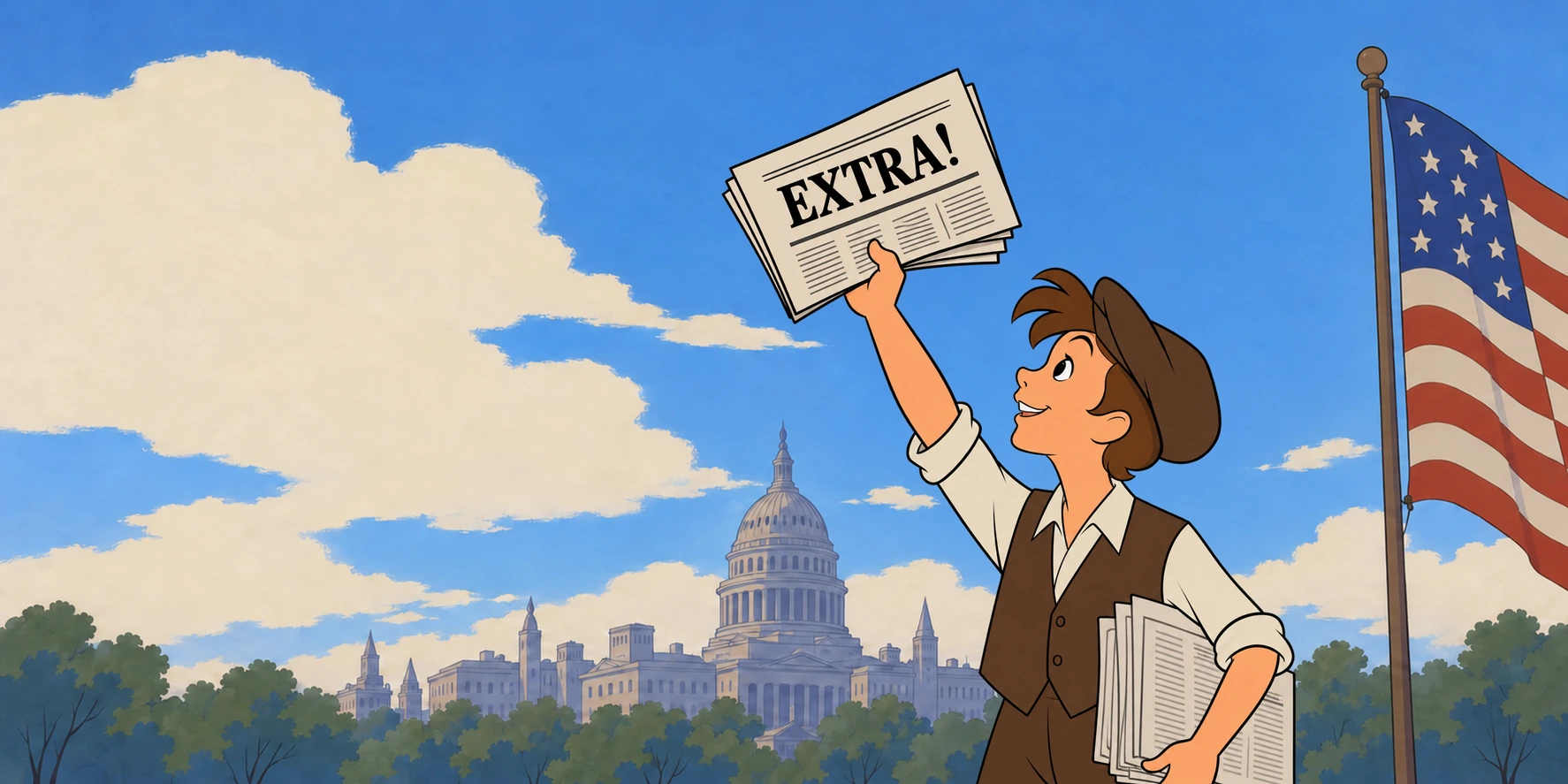
American Stories · 1850–1929
People. Ideas. Everyday lives in print.
Behind the headlines were familiar questions. How should we live? Who can we trust? What do we owe our neighbors?
Based on our experiment What the Papers Held.
Turn back the pageBefore you begin · what to look for
Old newspapers are packed with news: trains arriving, crops sold, meetings held. Tucked between those facts is a quieter kind of sentence, where someone says what is good, fair, wise or worth doing.
Those sentences are the treasures in these rooms. Every clipping you lift holds one. Can you tell the two kinds apart?
The mayor closed the saloons on Tuesday.
It tells you what happened.Closing the saloons protects our families.
It tells you what someone believed was right.Examples written for this page. Try spotting real ones →
Turn through time
Choose a time. Open a small story.
Listen for the questions that still sound familiar.
If you did this by hand
The experiment read, sorted and counted every one of these articles. Here is the same work done the old way, with a pencil and a good lamp.
0hours
0eight-hour workdays
0years of full-time work
The reading room
A farm column. A town argument. A tribute.
Choose a question and lift a clipping from the table.
Where the papers were printed
Every clipping here came from a local paper. Each square is a state; the lit ones hold a story. Choose one to lift its clipping.
Towns large and small printed their own papers, often several at once.
Your reading table
Keep a clipping as you read. Come back to the stories that stayed with you.
Your table is ready for its first clipping.
Inside the experiment · four rooms
A computer program read 1,600 articles from 735 papers, looking for what people valued rather than what happened. Try each of its steps with your own hands.
Room I
Most of a newspaper is news: who arrived, what was built, what it cost. Hidden among the facts are sentences that say what is good, right or worth doing. Slide the magnifier across the page and pick the line that holds a view.
Room II
Nine slips, nine different papers and years. Some are saying the same thing in different words. Drag them into three piles of your own, then see how the experiment sorted them.
Room III
Out of all those piles, the experiment found five big ideas that ran through eighty years of papers. Choose one and pull its cord to follow it all the way down to a single printed page.
Room IV
Because every period got the same number of articles, the experiment could measure what rose and what fell. Turn the crank and watch the jars fill and drain.
Want the whole story, with every number and its caveats? Read the full experiment
A game for sharp eyes
Read the clipping. Slide to the year you think it ran.
Close guesses earn up to three stars.
Step into the story
Imagine an icy walk outside your door. Neighbors are slipping on their way through town. You’re asked what should happen next.
This is a question for you. A real Bismarck newspaper asked its own version in 1906.
The town is talking
Choose a path to see what it asks of a community.
From page to screen
Every clipping here was set in metal type, photographed onto microfilm, scanned, and read letter by letter by a computer. Worn type and smudges cause slips. The experiment quotes them exactly as they are. Can you catch them?

Voices from the page
Keep the page open
These are words from particular newspapers, not a record of what everyone believed. Our introductions help set the scene; the clippings keep the words from our newspaper collection. Some letters were misread when the old pages were turned into text.
Follow a source link to see what surrounded a sentence. There is always more on the page.
Back to the reading room